Eight ways video games make driving more fun

A symbiosis has formed among road, track and game console—and it’s making us all happier behind the wheel.

Sean McFarland

This article was originally posted on The Drive.


touristenfahrten_5_2015

1. Touristenfahrten at the Nürburgring Nordschleife— Why content yourself with ripping through the Nordschleife on Gran Turismo when you can do it for real? Touristenfahrten is the very real opportunity for the public to try their hand at the circuit known as the Green Hell. While the Nürburgring has always been a mythical destination for race fans, its popularity boomed after the track’s debut in driving simulators (not that heightened interest has staved off bankruptcy. Sigh.). Touristenfahrten days are some of the track’s most popular attractions. Devotees can even rent specific track-prepped machines for their 20.8-kilometer adventure.

098575100_12251931212. Extreme Track Cars — Ask an eight-year-old gamer to style a track toy, and you’d get a hyper-minimalist, sinister machine with digital everything. Remove any semblance of creature comforts, push wheels hard to the corners and you’ve created this generation’s Caterham or Lotus 7. Cars like the KTM X-Bow even incorporate gaming-style lap timers. The only thing separating these cars from virtual reality is an Oculus Rift.

098575100_1225193121

3. The Lap of Manhattan— In 2013, a driver initially known only as “Afroduck” shared a visual cocktail of blurry boulevards, reckless endangerment and a BMW Z4 on YouTube. In just over 24 minutes, Adam Tang whirred around Manhattan’s perimeter at an average speed of 66 mph, shattering a very much unofficial, and equally illegal, record time of 26:03. The video circled through the automotive community and Tang gained a reputation as a real-life Midnight Club racer. Although he was convicted of reckless driving, fined and sentenced to a year in jail, the Canada native fled northward, where he remains.
boutique

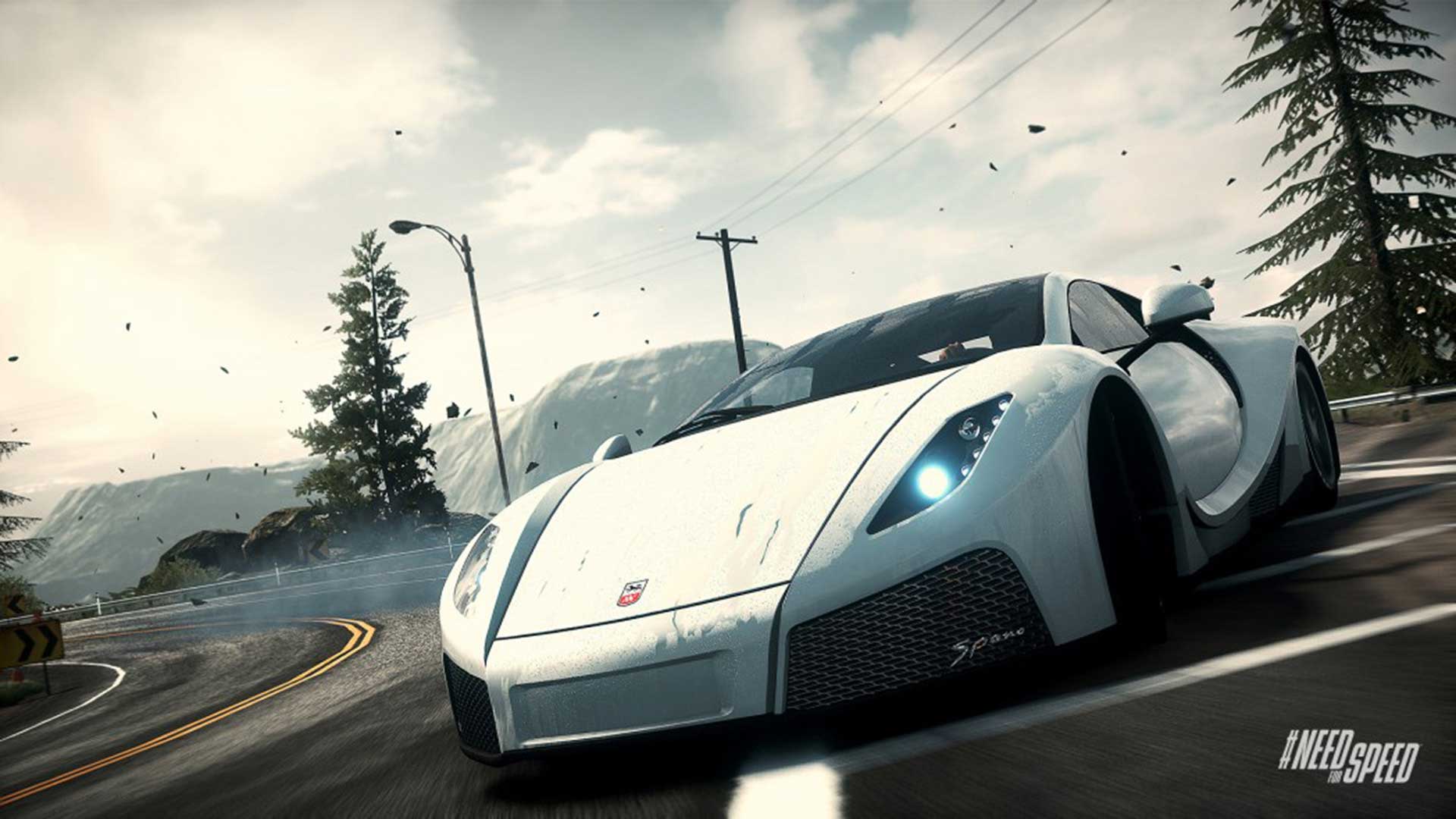
4. The Survival of Boutique Automakers— Sustaining a tiny, performance-oriented brand was once a near impossibility. Who would take a risk on an unproven artisan when names like Ferrari, Lamborghini and McLaren existed? The video game generation, however, proved a tremendous asset for niche manufacturers. British carmaker TVR saw success when they made the original Gran Turismo roster—if not enough to avoid falling into receivership. But today, names like Pagani, Koenigsegg, Wiesmann, GTA (pictured) and others survive and thrive, due in part to gamers and developers keeping these niche pleasure craft on wealthy enthusiasts’ short lists.

escapism

5. Driving as Escapism— Anyone who has fiddled with the Forza Horizon series understands that the exotic vistas, weirdly appealing music festivals and rare cars scratch a voyeuristic itch. Throw in barn finds, social online gameplay and a sandbox environment, and Turn 10 Studios has a heady brew in hand. It’s no coincidence that ads for cars like the Scion FR-S and Mazda MX-5 Miata have pitched driving as a meaningful endeavor. These machines, known somewhat paradoxically as driver’s cars, appeal directly to gamers who seek low-priced, non-virtual chariots.

modding

6. Aftermarket Insanity— When the Need for Speed franchise took on street racing culture in the wake of the original Fast and the Furious film, the popularity of modding exploded. Bright neon underglow, vertical doors and spinning wheels were basic facets of Need for Speed: Underground. After the game’s debut and sequel, car culture went even more rabid for bodykits and spoilers. Functionality be damned, you could buy kits and aero parts for anything from the Mitsubishi Eclipse to the Dodge Caravan. Depending on whom you ask, this is the automotive yearbook page you skip. It’s just too embarrassing.
paddle

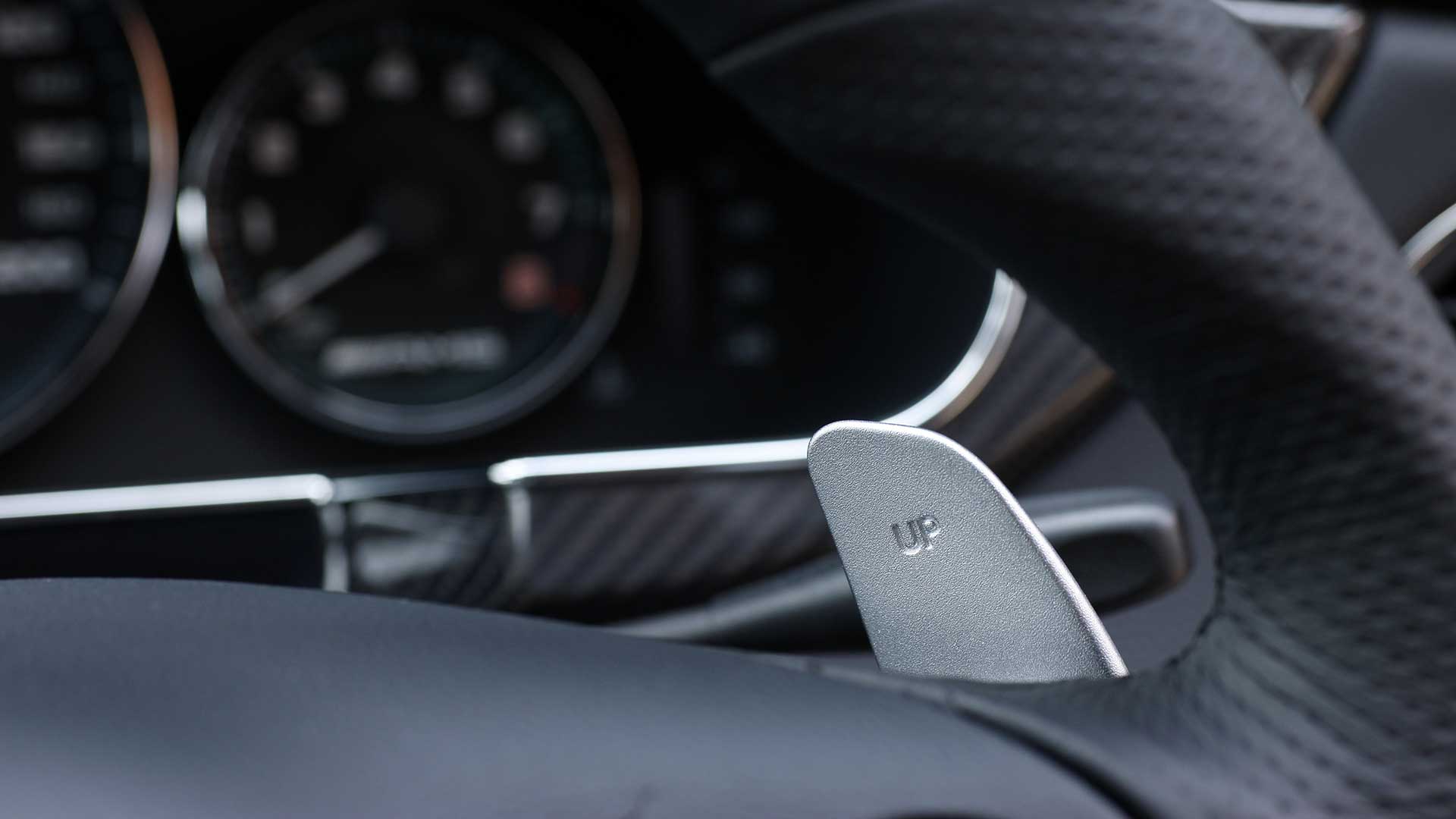
7. A Preponderance of Paddles— In the mid-Nineties, around the same time Ferrari was introducing them on the F355 sports car, the original Gran Turismo on Sony PlayStation was absolutely nailing paddle shifters. Before they were available on most mainstream cars, advanced gamers could enjoy the perfect blend of manual and sequential gearboxes from the comfort of their couch. As paddle shifters trickled down from sports cars to hot hatches, some games introduced handheld clutches to greatly enhance the gaming experience.

edbolian

8. Ed Bolian’s Cross-Country Record— It’s a question ripped from the thoughts of any open-road gamer: How fast could I drive across the U.S.? In October 2013, the team of Ed Bolian, Dave Black and Dan Huang set this record on public roads, crossing the United States in 28 hours, 50 minutes and 26 seconds. Although the average speed of the trek was 98 mph, the trio’s Mercedes-Benz CL55 AMG topped 130 mph for over 90 minutes total, and 158 mph on several occasions. It’s a record that probably won’t—and shouldn’t—be broken any time soon.

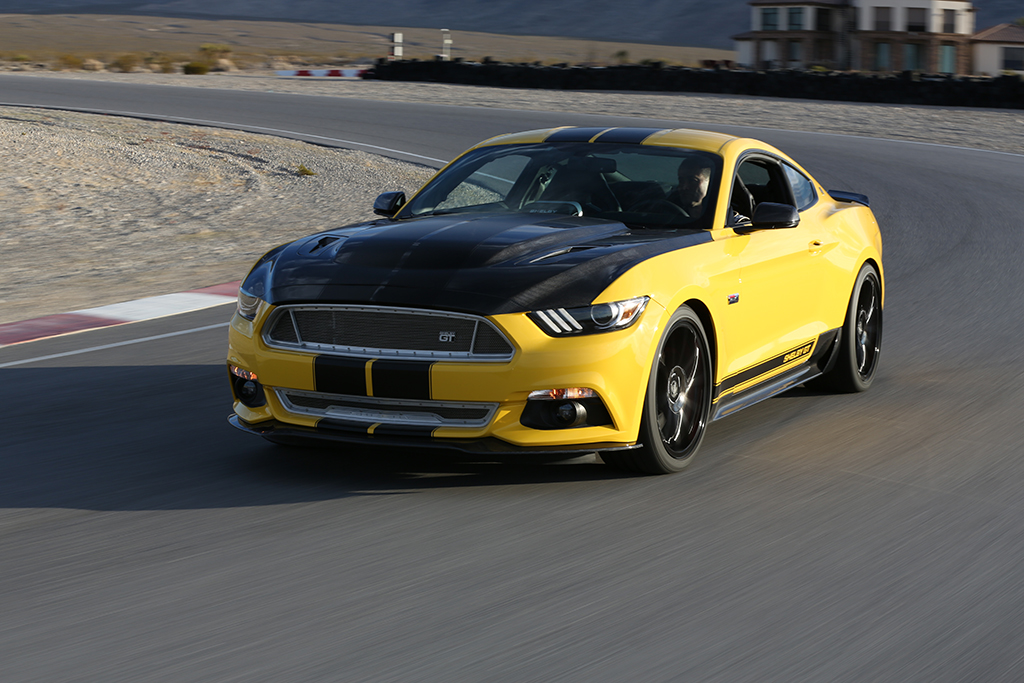
Have we reached peak Shelby?

The legendary company’s new tuned Mustang EcoBoost costs $50,000 and adds 25 horsepower. Has Shelby American finally jumped the shark?

Sean McFarland

This article was originally posted on The Drive.


shelbyhero

Modifying cars isn’t a hobby, it’s an exercise in fiscal irresponsibility. It’s easy for the speed-obsessed to open up their wallets before taking a step back and asking, “Should I?” No one understood the dichotomy, and the resulting business case, better than Carroll Shelby, the venerated Texas chicken farmer turned racing entrepreneur.

Mr. Shelby, who died in 2012, is the celebrated architect behind the original Mustang GT350, Daytona Coupe and AC Cobra. He spent a half-century ensuring that his company, Shelby American, was synonymous with big horsepower and brash add-on styling. Speed was paramount. The cars dripped character.

2015SGT-7

Now, Shelby American has introduced its Shelby GT EcoBoost, based on the new four-cylinder Mustang, testing just how heart-driven brand loyalists are. For the pleasure, buyers must fork over $23,995 (not including the original $26,295 cost of the standard Ford Mustang EcoBoost). So how much Shelby does one get for Audi S4 money?

Not much. Carbon-fiber paneling, 20-inch wheels and a whole lot of badging. Also, a short-shift kit, a few suspension bits and an exhaust, all lifted directly from the Ford Performance catalog. Meaning you could buy all those parts at the dealership. For less than $4,000. Total horsepower gain is a paltry 25 hp, bringing the standard Mustang’s 2.3-liter four-cylinder up to 335 ponies.

There are optional extras, too, and they don’t exactly bolster the value case: Upgraded Wilwood brakes, some additional carbon fiber and, uh, even more Shelby badging. Rounding out this reality check is a roll cage, racing seats and five-point racing harnesses.

2015SGT-8

Even for the most ardent fans, the $50,290 Shelby GT EcoBoost is a confused personality. It’s dressed to excite, but has four cylinders fewer than most Shelbyians probably want from their Mustang. It’s better on gas, but the health of Siberian permafrost has never been top of mind for Shelby customers. Perhaps most damning, though, is that it looks quick, but isn’t all that much quicker than its root material.

So, has Shelby jumped the shark? Customers will ultimately make that determination. But being 100 hp down on—almost $17,000 pricier than—the archetypical Mustang GT V-8 (saying nothing of Ford’s own $50,000 GT350, approved by The Drive’s own A.J. Baime at Laguna Seca) this Shelby leaves us cold. And who wants a Shelby without the Carroll’s trademarked combination of speed and personality? Now that’s irrational.

The Pride of the Ocean State

Lil’ Rhody is no Hollywood—just don’t tell Ben Hague that.

Sean McFarland

On the surface, Ben Hague looks like just another comedian trying to make it big in Manhattan—and it looks like he just might. He presents topical comedy effortlessly, stands before massive audiences with ease, and is confident in a way that almost makes you jealous. Although the RI-based comedian is beginning to make his mark in New York City, he’s not quite through with his work back home.

In Rhode Island, Hague leapfrogged from morning television, to drive-time radio, to headlining on the state’s comedy scene before taking his talents to the big city. Many in the Ocean State wondered if they’d ever see him again. But Ben made sure not to let his comedy career get in the way of his latest Rhode Island-based project. Getting Home is Hague’s first film, one that he not only wrote, but also starred in.

(Courtesy: Getting Home-The Film)

Because the short film follows a pair of soldiers on their last few days of service in Afghanistan as they fight to return to their base, Hague took the opportunity to extend the movie’s scope beyond the big screen. Operation Stand Down, a RI-based charity committed to supplying veterans with local housing, will see a portion of the Getting Home’s proceeds. So far, the movie has a bright future, debuting before a sold-out crowd in Newport in late September—all of which makes Hague question swapping his future in comedy for a future in filmmaking.

You’ve been a standup comedian for a while. What sparked the transition from that to executive producer and actor?

As a comic, you’re technically a writer, and I’ve always been fascinated with the drama side of stuff, and I went to school for that. But I honestly, personally, just needed a break from comedy. I was not in a really good place with my comedy at the time. I was sick of writing jokes every day and was just frustrated a little bit and needed something totally the opposite.

So you wrote a drama.

It opened up a part of my brain that I don’t use very often doing comedy. It was a challenge and it was just exciting—I was really excited to get up everyday and work on it.

What was the inspiration for the film?

Well I’m a big supporter of the military and both my grandfathers served, my cousins and uncles have served and to be honest, I always said to myself if I do a movie, I’d love to do a war movie.

Did you want the audience to leave the theater with a certain mentality?

I wanted them to leave with a thought of, “Wow, there are so many untold stories about our soldiers that are probably similar to this one that happen every single day.” Not every story is a Black Hawk Down or a Saving Private Ryan, sometimes it’s just like what I wrote: these two guys are just these young kids who talk about war and also the people that they left behind: the parents, their wives, their kids. The soldiers aren’t the only ones who go to war.

I agree. My father served in Desert Storm.

Yeah, so you know how it is, man. There are so many aspects of what happens when a soldier goes away. I really wanted to capture the isolation that these guys go through a story that’s truly believable.

When you were playing SGT Justin Carrier, did you learn anything from your character that took you by surprise?

No matter how tough these guys are, these guys are vulnerable. These guys have feelings. They do open up to their buddies. They do talk about their hopes and their dreams and seeing where they want to be when they get home, as opposed to just being these robots that are stuck out there to do their job. These are human beings.

Getting Home pairs up with Rhode Island’s own Operation Stand Down. How did that pairing come to fruition?

When I started writing the movie, I said we’d do some sort of premiere or something like that, and I wanted to team up with a charity. I decided to go with Operation Stand Down because it directly benefits soldiers from Rhode Island. 90% of the movie was shot in Rhode Island, a lot of the funds that we raised came from Rhode Island, and so I kind of wanted to keep it there.

You mentioned that you’d be pitching the film to festivals. Which ones exactly?

All the big ones. We’re going to send it to Sundance, Tribeca and see what happens. I think we’re going to do really well in some smaller ones, local festivals, whether it’s Newport, or Cape Cod, or smaller ones across the country. What we were able to do on our budget, you just don’t see in independent films. You watch any short and it’s two people sitting around chatting and it cost them $20,000 whereas for about $9,000-10,000, maybe $12,000 max, our film has helicopters in our movie, explosions, a cast and crew of twenty people—you just don’t see that.

I had ten or fifteen friends who came out to Quonset Air Base on a Sunday morning in the cold to put on shorts and a t-shirt to run army drills to be guys in the background. If they all said, “Eh screw this, I’m hungover, I’m staying in bed,” guess what? None of those scenes look as spectacular or as real or as believable.

(Courtesy: Getting Home-The Film)

On Facebook, you reached out to your followers to help find props, filming locations, even various crew positions. What was it like having that support?

People knew from the beginning, they could just tell how passionate I was about this project. People wanted to be involved. Rhode Island is unique like that where it’s so beyond supportive. If I were born anywhere else, this film would never have been made. That’s the bottom line.

What’s next for Ben Hague?

Standup will always be my first love and I will always use my standup to pay the bills and make a living. I took so much time away from that because this movie was just so time consuming, so I’m looking forward to getting out and writing a new hour of material.

But that being said, this film opened my eyes to what I want to college for, which was acting and writing. As much as I love doing standup, and I’ll always do standup, this opened my eyes to like, “Man, this is what you should be doing.” Every day was so exciting on set—I loved every minute of it.

The Price of Fandom

Sean McFarland

The Union Square Barnes & Noble has long been the main stage for the larger names in New York City book signings. Hillary Clinton, Andrew Cuomo, and Stephen Colbert have all headlined at the four-story reading/Nook/knick-knack/Starbucks mecca to autograph their texts before eager fans who’ve waited hours for a fifteen second interaction with their favorite celebrity. Even the upcoming set list of book authors is noteworthy, highlighting acts like Jerry Lee Lewis, Bill Nye, and James Franco.

This isn’t at all similar to the midtown location of B&N, which is less like the main stage at a music festival and more like the one closest to the parking lot with the bands that you forgot about. Far be it to call Mick Fleetwood a B-tier act, but his bookstore audience of less than 100 was hardly smashing through the entrance for an autograph.

“This is just another day at the office,” said Mike Knight as he reached down and inched forward his two green bags brimmed with Fleetwood’s autobiography, Play On: Now, Then, and Fleetwood Mac: The Autobiography. “I’ve got 15. There aren’t many people here, so I’d be pretty happy if I could get $85 a piece for them.” Mike, who makes his living off of such signings, was poised to earn a handsome profit from the $25.50 copies. Several of Mike’s neighbors in line exhaled disapprovingly at the thought of such exploitation.

A hardcore, but muted handful arrived at 5 a.m. to ensure their spot in line. Mike, 33rd in line, arrived 45 minutes before 1 p.m. event.

“I’m getting these signed for my family,” said #34 as he smiled upward at Mike who was busy playing with his phone. Once he notices the eager grin, Mike smirks in return upon the shorter, older man. Bill is his name. “My son couldn’t be here and we’re all big fans. I’m just happy to be here.” Bill eagerly clutched three books at chest level, front covers folded open for signing, ready for the strokes of Fleetwood’s Sharpie.

“Bill Clinton I met a few times,” said Mike as he thumbed through photo albums of book signings on his silver HTC. The middle aged man poked at his silver hair and picked at his orange oxford shirt. Mike’s voice was deep and, like his appearance, was eerily similar to that of Anthony Bourdain—who he’s also met. “These signings never get crazy, but some are busier than others. The Clintons, KISS, Muhammad Ali were all nuts.”

The sleepy line barely wrapped around the corner onto 46th street. Swap Fleetwood Mac’s formerly explosive fan base for one with aching knees, a bedtime south of 9 p.m., and a fancy for Reader’s Digest, and you’ve nailed 80% of the attendees. Most of the patrons under 40 sought autographs for their parents. A man named William sat first in line and was the lone fan that brought a folding canvas chair for the event. The second man in line stood awkwardly close to the seated William. Perhaps an appearance by Lindsey Buckingham would have gathered more lawn furniture.

Half asleep and embittered ushers in cheap, black suits herded the line into the store and up the escalator, and instructed them to wrap around the fiction section in a cramped, but orderly line. The Michael Buble store soundtrack was abruptly stopped and “Go Your Own Way” began to play. The three men behind Mike yawned in unison.

At 1:14 p.m., an employee announced that Fleetwood wouldn’t be personalizing his signatures. The lone woman in line, #31, humphed and muttered something about her father’s name in Mick’s handwriting. A few others rolled their eyes.

“If he’s not doing that, I wonder how he’ll feel about signing fifteen books for one person,” Mike whispered as he flipped his investments to their cover pages. “It said this was an unlimited book signing, but you never really know what these guys will do or how high maintenance they’re going to be.”

The line lurched forward and Mike began to crane over the line to catch a glimpse of the Fleetwood Mac drummer. He fidgeted with a point and shoot camera and hurriedly ushered his books forward, hitting the heels of the ponytailed man in front of him.

“Sorry.”

Mick Fleetwood’s appearance is exactly what you’d expect from a rocker now past his heyday. His black jeans, white button down, and plaid red vest were hardly indicative of a rock star. Even though Fleetwood was balding, his remaining white hair was tied into a short ponytail. Couple this with a paper white beard and Fleetwood looked less like a rock star and more like Santa Claus before the Christmas rush—although Santa never had a polite British accent and flirted with readers about his home in Maui.

Mike snapped rapid-fire pictures on his small camera and almost completely missed his turn. Fleetwood’s publicist cheered and nodded at the sight of Mike deadlifting his bags of books toward the drummer. He pointed from across the small space and smiled, “Now that’s what we’re talking about.” Mike breathed a sigh of relief as he was ushered in front of Mick.

Fleetwood, sharpie in hand, mouthed, “wow” and began tackling the first book.

Mike glanced at Fleetwood’s matching red sport coat on the back of the chair. “That’s one hell of a jacket.” Fleetwood looked back, temporarily pausing his signatures. The three metal wristbands on his signing hand jingled loudly.

“Oh thank you,” said Mick, “It’s a hand-me-down from Rod Stewart.”

A long awkward pause ensued. Mick puckered his lips and moved swiftly through the pile. Mike fiddled nervously with his jean pockets and rocked back and forth on his heels. Eye contact wasn’t necessary. Mike and Mick both understood what was happening. This was a business transaction. Nothing more. Nothing less. Mike did his best to distract Mick.

“Is there anyone else from the era that you’d like to play with anytime soon?”

Fleetwood finished signing the fourteenth copy. “Hmm, I think it would be pretty cool to get Rod and Ronnie Wood together to play a show.”

“That would be cool!” said Mike as he grinned uncomfortably.

Fleetwood signed the fifteenth copy. “It’s all about getting the guys together to do something pure. It’s not always about the money.”

*Some names in this story have been altered to protect their interests.

The culture that bred a Hellcat

Sean McFarland

This article was originally posted on BBC Autos.


Raw, powerful and even a bit vulgar, the Dodge Challenger SRT Hellcat is anything but a vapid flexing of Chrysler muscle.

Derived from a cult of speed, the 707-horsepower hellion is a proper homage to one of the most peculiar eras of US car culture.

In the late 1960s and early ’70s, drag racing was front and centre, and names like Mustang, Camaro and Charger created a motoring nomenclature all their own. The Dodge Challenger began to exhibit typical drag-racing attributes not long after its introduction: high-horsepower engines, staggered-width tires and a lust for the quarter mile. As boutique manufacturers began to spring up to supplement the carmakers’ go-fast efforts, the culture boomed.

Matthew Macomber’s video, filmed in New England in 2010, is a slowed-down homage to life at the drag strip, an existence measured in fewer than 11 ticks of a stopwatch. Muscle cars and dragsters convene at the start. The flick of a green light whips the machines into a froth of noise and fire. Some launch cleanly while others lunge forward in dazzling wheel-stands, their tires alight.

Muscle-car culture was sharpened at the drag strip, but born at stoplights. Once bit by the drag-racing bug, owners of street cars could fall hostage to their machines, obsessing over the minutiae that would make their cars a little bit faster. Cornering? A foreign concept. Macomber’s video is a close study of the only thing that mattered: straight-line speed.

The lineage to the 2015 Hellcat is clear. With a supercharged 707hp V8 engine, dubious handling and a profligate appetite for tires and petrol, the Hellcat is a fascinating piece of hardware. The culture that birthed this modern muscle car seems well served.

Infographic: The true price of Dodge’s SRT Hellcat

Sean McFarland

This article was originally posted on BBC Autos.

With its supercharged 707-horsepower V8 engine, tire-smoking torque and retrofuturist styling, the Dodge Challenger SRT Hellcat is an unambiguous, unabashed throwback. But it distinguishes itself from its nostalgia-tinged peers – saying nothing of high-horsepower European sports cars – on its value case.

Granted, consumers do not cross-shop bawdy Detroit muscle against bespoke European land-missiles, yet  some true-to-life comparisons underline just how stellar a value Chrysler’s fire-breathing feline is –  and the financial chasms that must be bridged to otherwise touch its tremendous output.

Rendez-vous: The illegal Tour de France

Sean McFarland

This article was originally posted on BBC Autos.


Calm under pressure, audacious skill and a bit of lunacy: all traits of a prepared racer. Coupled with purpose-built equipment shaped by the wind, and you have a recipe for a properly exciting race through Paris.

The month-long Tour de France stormed through the streets of Paris on 27 July, with scores of cyclists swarming towards the finish through a crush of hardcore fans. It’s an evocative scene, one repeated throughout the ages every year. But in 1976, there was an exceptional, extra-legal sprint that was filmed, discussed and ultimately passed around in video-cassette form like contraband.

Nearly four decades ago, French director Claude Lelouch releasedC’était un rendez-vous, a short film depicting a Ferrari 275 GTB illegally blasting through the dormant avenues of a Paris dawn, coming to rest at the Montmarte overlook adjacent to Sacré Coeur. The speed and reckless maneuvers in the picture caused a tiny stir in the City of Light and among car enthusiasts worldwide, as copies of the short film slowly made their way across oceans.

Translating to It Was a Date, the production is regarded as one of the earliest – and still one of the best – street-racing films. Though many a driver has felt the impulse to speed away from a red light or dash through a commute as if it were the last lap at Le Mans, it would be folly to follow through. Lelouch couldn’t help himself. The director weaves through a makeshift 6.5-mile circuit in less than eight minutes while maintaining remarkable pace. But all is not what it seems.

A keen viewer will note that the speed and movement on screen does not always correspond with the sound of a Ferrari at full chatter. In fact, Lelouch used his massive Mercedes-Benz 450SEL 6.9 sedan for filming. To make the movie more exhilarating, the director later dubbed over the soundtrack with that of his Italian sports car. Forget suction-mounting a GoPro camera; Lelouch affixed a full-size film rig to the front of his German land-barge.

And while there was no yellow jersey or flowered garlands awaiting Lelouch at the finish of his “tour”, there was something more permanent: immortality.