Eight Great Racing Games That Will Make You Feel Old

Forza who? Grand Theft what? Bow down to the pioneers that made driving simulators such effective time-suckers.

Sean McFarland

This article was originally posted on The Drive.

pp

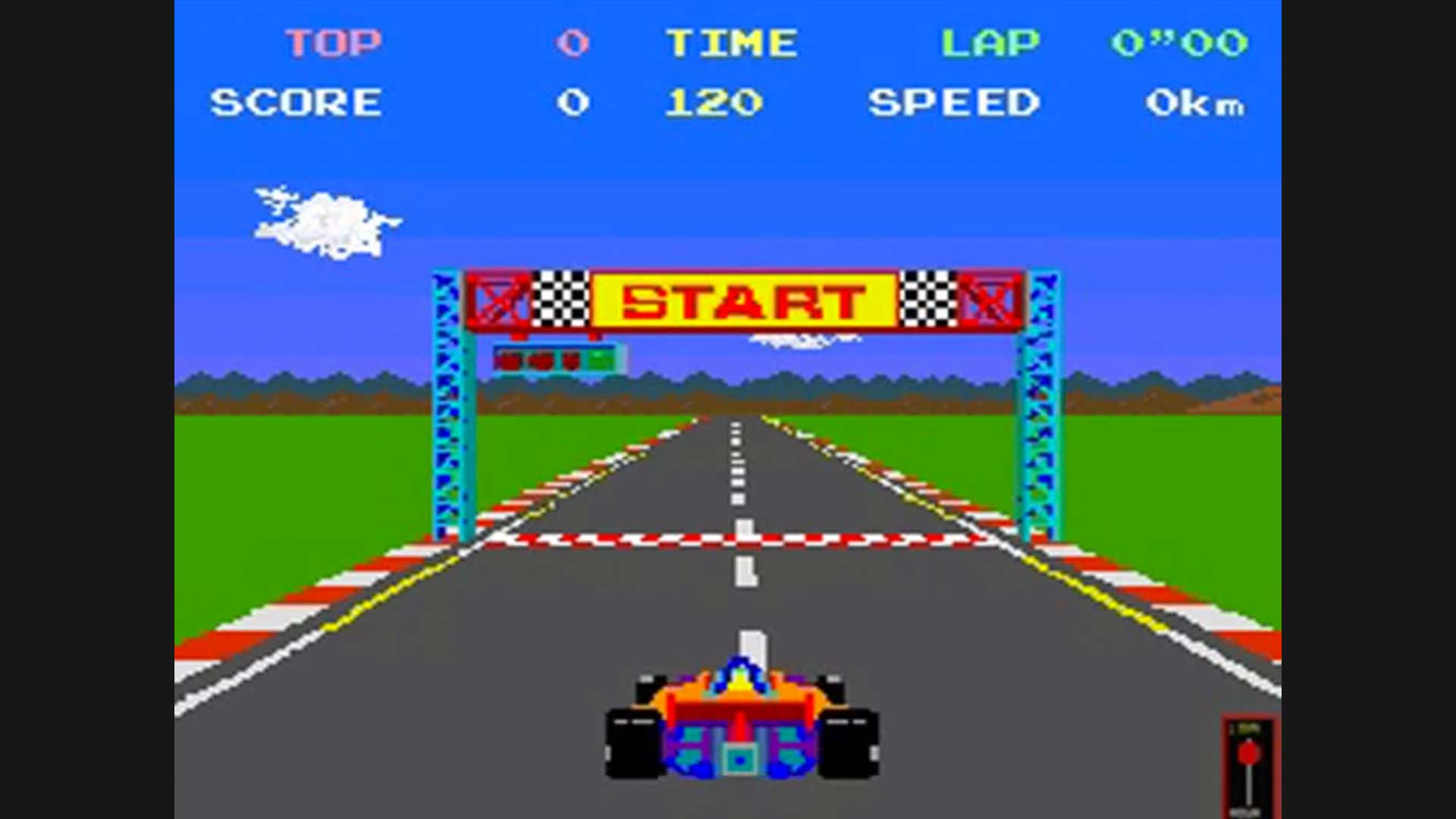
POLE POSITION (1982) — The bread-and-butter racing game, and one that now demands, but rarely gets, respect. Graphics were primitive and opponents spaced awkwardly throughout the track, but the game did teach you the importance of holding a race line and the dark art of dodging puddles at Fuji. An oscillating engine hum and low burble of the rumble strips was the only soundtrack needed. No distractions, no gangsters sticking you up in the pits. Pole Position was pure, 8-bit bliss.

sor

IVAN “IRONMAN” STEWART’S SUPER OFF ROAD (1989) — Few games could stand up the stadium-style truck racing in Ivan Stewart’s Super Off Road. The upright arcade version featured three-abreast steering wheels and pedals that placed competitors side-by-side. Even for the era, the game was surprisingly accurate with its depiction of off-roading articulation. Throwing and elbow or two at your opponent mid-corner was fair play. After all, rubbin’ is racin’.

f355-1_0

F355 CHALLENGE (1999) — Although Sega’s one-make Ferrari racing game was available on Dreamcast and PlayStation 2, the real thrills were found in the arcade. Not only did gamers find headrest-mounted speakers and three adjacent screens for optimal driver vision, they also were treated to F1-style paddle shifters or a gated manual transmission with a clutch, the better to tease goosebump-inducing mechanical howls from an F355. The steering wheel even communicated feedback while cornering. Some arcades still carry the game—a testament to the quality of the gameplay as well as the hardware.
rally

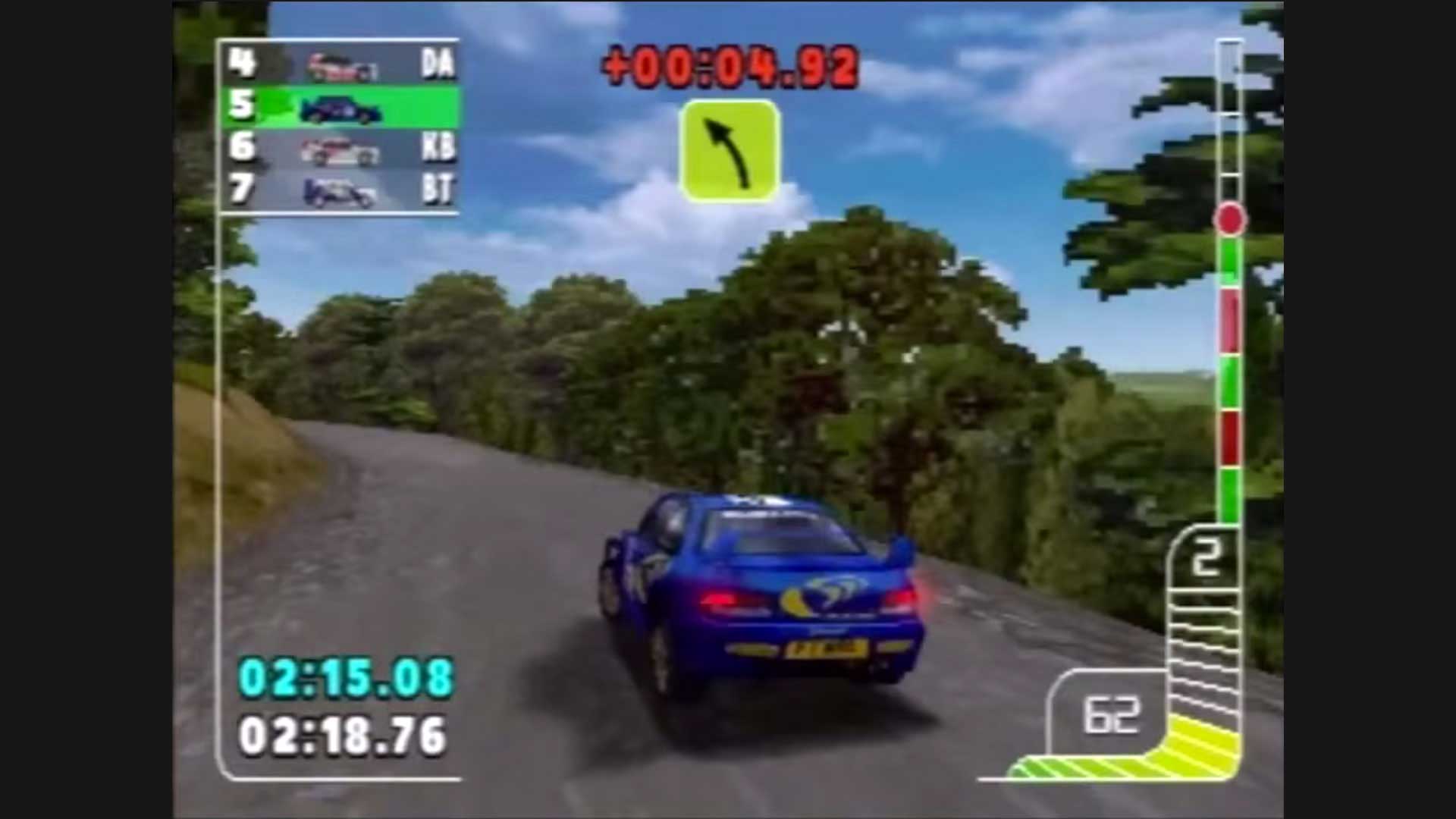
COLIN MCRAE RALLY (1998) — Named for the Scottish rally kingpin, this one gave players a taste of the most iconic World Rally Championship cars of the 1998 season, including McRae’s own Subaru Impreza WRC (and a few scrappy Ford Escorts). The graphics were sophisticated for the era, although the eight stages were not accurate to their real-life equivalents. An in-game navigator provided authentic rally guidance for the course ahead: “5 right into 4 hairpin left, square right.” Even by today’s standards, Colin McRae Rally remains one of the more entertaining—and technical—racing games developed.
am-2

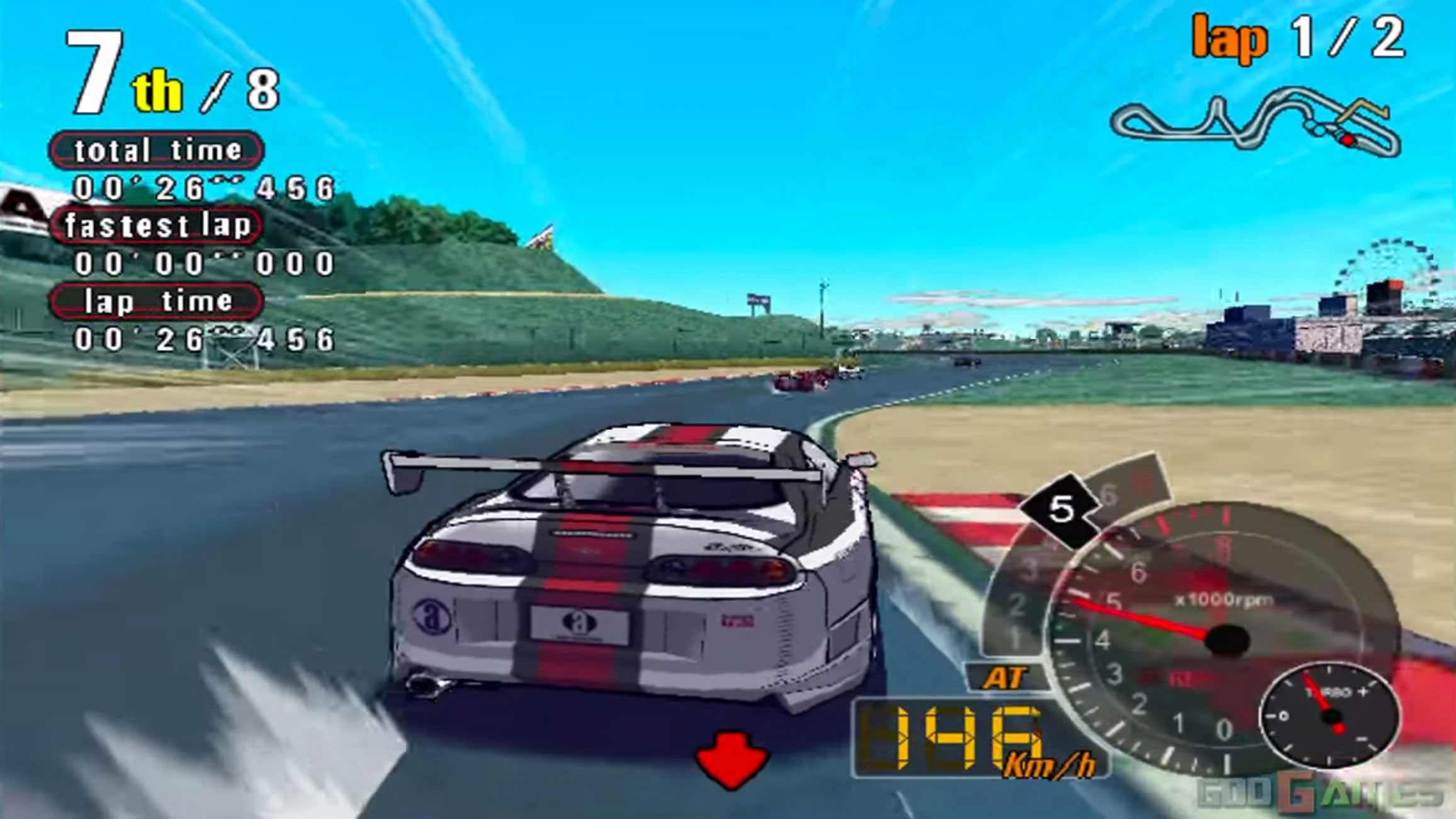
AUTO MODELLISTA (2002) — Here was a different sort of racing simulator, combining comic-book visual elements with cult tuner cars. The Capcom-produced game was proudly Japanese, boasting several mountainous sections, called touge, Tokyo road courses and the famed Suzuka Circuit. Players also got a plethora of tuning and styling upgrades. Despite the game’s embrace of the unconventional, it was also faulted for its cars’ handling characteristics. For gamers who appreciated the reprieve from the seriousness of other driving simulators, however, Auto Modellista hit a sweet spot.

cw

CRUIS’N WORLD (1996) — Anyone who loves Cruis’n World for its realism should get their brains scanned. The game represented a day off from the forward development of racing graphics. Yet by literally making a day’s play out of driving, the heir to Cruis’n USA ruled by not taking itself seriously. It was a riot. Jumps sprouted from the ground at random, car crashes sent competitors skyward and all cars had four-speed transmissions, regardless of their real-life specifications. Few things mimicked the panic of a dwindling clock and a safety point that’s too far ahead. But there was no mistaking the euphoria of making it through and continuing gameplay. “Checkpoint!”

nfs

NEED FOR SPEED: HIGH STAKES (1999) — With its heady waft of wealth and indifference to the law, High Stakes was the driving simulator that pitted sports cars against both the police and other racers simultaneously. The car list was visual ecstasy for fans of supercars from the Nineties. Especially skilled drivers were even able to unlock virtual editions of the McLaren F1 GTR and Mercedes-Benz CLK GTR. High Stakes provided the adrenaline rush with a hi-NRG soundtrack and groundbreaking damage modeling. If players sought good karma, it even allowed them to play as police and pursue the no-goodniks. Righteous.
driver

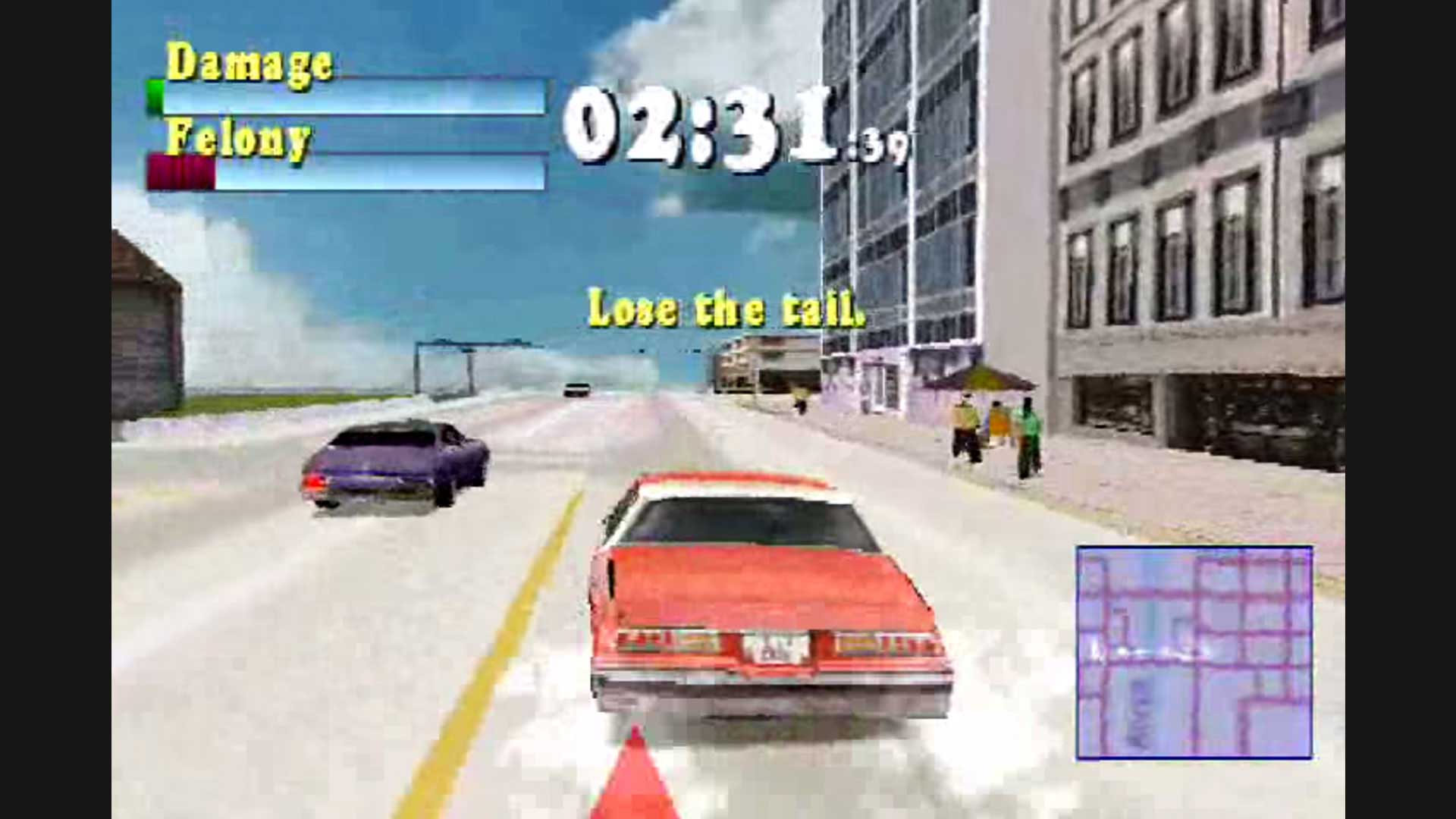
DRIVER (1999) — Who could forget John Tanner, the undercover cop committed to busting organized crime in his sweet muscle cars? Driver had the grit of early Seventies New York crime cinema and the flair of a James Bond flick. Although the graphics and handling characteristics felt a bit laggy, the game was satisfying for players who wanted to add a crime-solving element to their virtual driving experience. Powerslides were paramount, and the console controller had a trick throttle option that guaranteed burnouts under hard acceleration.

Up Close & Personal at the Pittsburgh Vintage Grand Prix

Despite living in Oakland for four years, I had never attended the PVGP. I had been told that droves of the car-obsessed flocked annually to the greens of the Schenley Park Golf Course to view some of the most legendary automobiles. For whatever reason, I always thought the event would be another overhyped, American-only car show with middle aged men stuffed into canvas lawn chairs beside their pride and joy (insert generic muscle cars here).

But no. Pittsburgh Vintage Grand Prix isn’t a weekly doo-wop nostalgia trip in a Sam’s Club parking lot. It isn’t even close to that.

When I entered the grounds in my humble Volkswagen, I immediately realized how foolish I was to pre-judge this show. My jaw hit the ground so hard, I thought Bill Peduto would call to remind me that fracking is illegal within city limits. The visual juxtaposition of million-dollar classics and common people-movers was staggering. Look away at the wrong time and you might miss some of the finest sculpted metal in automotive history. Wow.

With many an egg on my face, I’ll step aside and let my imagery show you what I’m on about.

DSC_0030

DSC_0094

DSC_0109

DSC_0131

DSC_0143

DSC_0150

Ferrari 1

Rendez-vous: The illegal Tour de France

Sean McFarland

This article was originally posted on BBC Autos.


Calm under pressure, audacious skill and a bit of lunacy: all traits of a prepared racer. Coupled with purpose-built equipment shaped by the wind, and you have a recipe for a properly exciting race through Paris.

The month-long Tour de France stormed through the streets of Paris on 27 July, with scores of cyclists swarming towards the finish through a crush of hardcore fans. It’s an evocative scene, one repeated throughout the ages every year. But in 1976, there was an exceptional, extra-legal sprint that was filmed, discussed and ultimately passed around in video-cassette form like contraband.

Nearly four decades ago, French director Claude Lelouch releasedC’était un rendez-vous, a short film depicting a Ferrari 275 GTB illegally blasting through the dormant avenues of a Paris dawn, coming to rest at the Montmarte overlook adjacent to Sacré Coeur. The speed and reckless maneuvers in the picture caused a tiny stir in the City of Light and among car enthusiasts worldwide, as copies of the short film slowly made their way across oceans.

Translating to It Was a Date, the production is regarded as one of the earliest – and still one of the best – street-racing films. Though many a driver has felt the impulse to speed away from a red light or dash through a commute as if it were the last lap at Le Mans, it would be folly to follow through. Lelouch couldn’t help himself. The director weaves through a makeshift 6.5-mile circuit in less than eight minutes while maintaining remarkable pace. But all is not what it seems.

A keen viewer will note that the speed and movement on screen does not always correspond with the sound of a Ferrari at full chatter. In fact, Lelouch used his massive Mercedes-Benz 450SEL 6.9 sedan for filming. To make the movie more exhilarating, the director later dubbed over the soundtrack with that of his Italian sports car. Forget suction-mounting a GoPro camera; Lelouch affixed a full-size film rig to the front of his German land-barge.

And while there was no yellow jersey or flowered garlands awaiting Lelouch at the finish of his “tour”, there was something more permanent: immortality.

The photo with a $35,000 secret

Sean McFarland

This article was originally published on BBC Autos.


A photo with a backstory. (Courtesy RM Auctions)

Every significant collection needs a crown jewel, that marquee item that slackens jaws and raises eyebrows. And at the coming Pebble Beach Concours d’Élégance, held amid championship golf greens in northern California, there will be no shortage of multimillion-dollar Ferraris crowding the auction block. But there are significantly less expensive ways to secure a one-of-a-kind piece of Ferrari mystique, worthy of sitting atop any collection – and it may even come with a valuable secret.

The photograph above, taken in 1964 at the 12 Hours of Reims endurance race in France, depicts the Parkes/Scarfiotti Ferrari 250 GTO passing the pits while in the foreground, Jacques Swaters, Belgian manager of the Ophem/”Beurlys” outfit, signals the team’s Ferrari 250 LM. The moment, captured in a seemingly nonchalant blink of a camera’s shutter, provides a brief but comprehensive glimpse at what made this era of motorsport so special – to competitors and collectors alike.

But look closer.

A discreet stash of signatures on the print, barely legible at a glance, brings this image into the upper stratosphere of automotive collectibles.

(Courtesy RM Auctions)

The photo is signed by many of the famous individuals within the frame – a murderer’s row of Formula 1 world champions and Le Mans winners. Signatures from, among others, Phil Hill, Derek Bell, Luigi Chinetti and Maurice Trintignant all adorn the image. Couple this with an exemplary shot of two famous Ferraris – one of which, the 250 GTO, being considered the most coveted car in the collecting hobby – and you’ve got a centrepiece that is certain to draw double-takes.

(Courtesy RM Auctions)

Although the print’s signatures are subtle, its size is hardly so – it measures over 11 feet long and 7 feet high. Were it not for the barely-there autographs, the image likely would not have sold in 2008 for 23,000 euros (roughly $35,772 at time of sale).

Though few would call the image affordable, it is quite a bargain compared to the Pebble Beach-bound relations of the aforementioned 250 GTO and LM: a 250 GT California expected to bring $12m to $15m, and a 275 GTB/C Speciale that could very well top $40m, making it the most expensive car ever sold at public auction.

All of which serves to make an archival automotive photograph even more attractive. Bonus: you wouldn’t have to worry about crashing it.

The hardcore hooligans: Ten cars with a little extra

Sean McFarland

This article was originally published on BBC Autos.


Carmakers push. If they create a widely loved vehicle, they tend not to sit back and admire their work. They ask, “Where to next?”

Such carmakers may try their hand at tuning: modifying their already impressive cars even further to create distillations – not distortions – of what makes them special. What follows is a group of cars that have received a little something extra; something that distinguishes them, and their drivers, from the norm. (Photo: BMW Group)

Mazda RX-7 Spirit R

The third generation of Mazda’s rotary-powered RX-7 is perhaps the most coveted of the breed. The curvaceous body, curious-sounding Wankel rotary engine and overall performance ticked all the right boxes for enthusiasts. So when the RX-7 was in its final years in the early 2000s, Mazda engineered a version specifically for the car’s most fervent fans. The Spirit R offered a 276-horsepower engine, a choice between an automatic and manual gearbox, and eye-catching aero tweaks, making it a faster, lighter and more aggressive proposition. Not only did it come in two-seater and 2+2 configurations, but the R also bore a Nardi steering wheel, lightweight Recaro seats and BBS wheels. All 1,500 Spirit R models were sold exclusively in Japan, save for one special unit produced for a Mazda executive in the United States. This car, the only existing left-hand-drive Spirit R, sits below Mazda’s Irvine Headquarters. (Photo: Mazda North America)

Ferrari 458 Speciale

Making its debut at the 2013 Frankfurt motor show, this track-focused version of the 458 Italia coupe boasts Maranello’s most powerful naturally aspirated V8 engine, as well as active aerodynamics in the form of flaps that open and close at various speeds. This stripped and striped version of the 458 produces 34hp more than the base car, in addition to weighing a remarkable 200lbs less. The Speciale also introduced Ferrari’s Side Slip Angle Control system, giving the car a welcome dose of good sense at the limit. Combining all of this with the Speciale’s wider tires and lower stance means a zero to 60mph time of less than 3 seconds and a top speed in excess of 202mph. (Photo: Ferrari North America)

Honda S2000 CR

The S2000 was Honda’s answer to the Porsche Boxster: a lightweight, free-revving two-seat roadster that emphasised driving dynamics above all else. The Honda won over enthusiasts, but never sold in the volumes that would ensure it any more than sleeper status. In 2008, Honda introduced a club racer variant of the S2000. Though it retained the 237hp 2.2-litre four-cylinder engine of the standard car, the CR was given a removable aluminium top, firmer track-oriented suspension and a quicker steering ratio. In its zealous quest to further reduce weight, Honda removed the spare wheel and made systems such as air conditioning and audio optional – the better to enjoy the CR’s superbike-calibre engine whine. (Photo: American Honda)

Porsche 911 GT3 RS

Wearing letters that hark back to the iconic 1973 Carrera RS, the GT3 RS of the mid-2000s was the 911 for a very particular Porsche buyer. The 3.8-litre 450hp flat-six-cylinder engine, sizable carbon-fibre wing and no-nonsense interior indicated these were not intended for idling in highway traffic. With the RS, Porsche flared the already-widened GT3 fenders to accommodate the nine and twelve-inch wheels at the front and back, respectively. But for a select 500 customers who craved an even more savage GT3, there was the GT3 RS 4.0, with 500hp and a curb weight just under 3,000lbs. (Photo: Porsche Cars)

Mitsubishi Lancer Evolution X MR

A rally car for the street, the Lancer Evolution has seen 10 generations. The formula has always been simple: a turbocharged engine, all-wheel-drive, four doors. The last three generations of the “Evo”, as the car has come to be known, have featured a more race-focused MR trim. Included in the 2014 MR is a twin-clutch automatic transmission, Bilstein shocks with Eibach springs and BBS wheels. The MR’s flappy-paddle gearbox also had three drive settings: Normal, Sport and an S-Sport optimised for high-revving track days. The only thing missing? A proper rally spoiler. (Photo: Mitsubishi)

Chevrolet Camaro Z/28

At first blush, the Z/28 may not seem anything more than a standard Camaro with a body kit. The shelf-like front splitter and aggressive aero tweaks are hardly an indication of its performance. The Camaro Z/28’s 505-horsepower 7-litre LS7 is roughly the same engine found in the previous-generation Corvette Z06. Chevrolet also put the Camaro on a diet, giving it thinner glass, optional air conditioning and lightweight wheels and tires that all told render the Z/28 some 300lbs lighter than the ZL1, previously the ultimate expression of Chevy’s muscle car. Granted, $75,000 for a Camaro may seem exorbitant – that is, until the spec sheet comes into view. Buyers get carbon ceramic brakes, five drive modes and a high-performance limited slip differential, all adding up to a faster lap around Germany’s Nürburgring Nordschleife than the Lamborghini Murciélago and Porsche 911 Carrera S mustered. (Photo: General Motors)

Dodge Viper SRT-10 ACR

Already one of the most raw of American sports cars, the Viper SRT-10 became one of the more frighteningly capable supercars on the market when it began sales in SRT-10 ACR form during the late 2000s. The American Club Racer package transformed the Viper into a track-gobbling carnivore. A carbon-fibre splitter, motorsport-style spoiler and eye-catching paint gave only a brief hint of the ACR’s capabilities. Its massive 8.4-litre V-10 churned out 600 horsepower and propelled the ACR to 60mph in under 4 seconds. Plus, with 14-inch vented brakes from Brembo, this striped serpent comes to a stop almost as quickly. So quick was the ACR, in fact, that it broke the unofficial lap record for a production car at the Nürburgring. (Photo: Chrysler Group, via Newspress)

BMW 3.0 CSL

Racing homologation is a simple rule: in order for a manufacturer to enter a car for motorsport, it must produce and sell a certain number of road-going versions of the car it wishes to race. In the early ‘70s, BMW produced the 3.0 CSL. The nameplate addition stood for “Coupe Sport Lightweight”, and it wasn’t a hollow marketing ploy. Aluminium body panels, thinner glass and a lack of soundproofing made the 3.0 CSL a canvas for high-speed motoring. So spirited was the car that the eventual racing version – nicknamed “The Batmobile” for its massive rear wing – became BMW’s first so-called Art Car, painted for competition by American abstract expressionist Alexander Calder. With just over 1,000 units produced, a clean 3.0 CSL commands over $100,000 at auction. (Photo: Benson Chiu/RM Auctions)

Ford Mustang Boss 302 Laguna Seca

For the 2012 model year, Ford offered a multitude of trim levels for its pony car, but with apologies to the 500-horsepower Shelby GT500, this was the year of the Boss – namely, the Boss 302 Laguna Seca, a track-optimised version of the already potent Boss 302. Both cars came with a 5-litre V8 engine that churned out 444hp. But only the Laguna Seca, named for the race circuit in northern California, was stripped of its rear seats in favour of a chassis-stiffening X-brace; received a massive, downforce-abetting front splitter; and ultra-sticky R-compound race tires. Regardless of whether you opted for black or silver exterior paint, the body came adorned with bright red accents. (Photo: Ford Motor)

Mini Cooper John Cooper Works GP Edition

The GP was an effort to take the already tuned JCW Mini Cooper to the next level. Mini removed the back seat to save weight, introduced an adjustable coil-over suspension and tuned the turbocharged four-cylinder engine to 218hp – up from 208. The GP edition was also distinguished by Recaro seats, ensuring driver and passenger would reach a well-bolstered 60mph in about 6 seconds. Only 2,000 of these Coopers were produced, making them some of the more coveted modern Minis. (Photo: BMW Group)